Build a Killer Home Gym for Under $500: The No-Nonsense Buyer's Guide
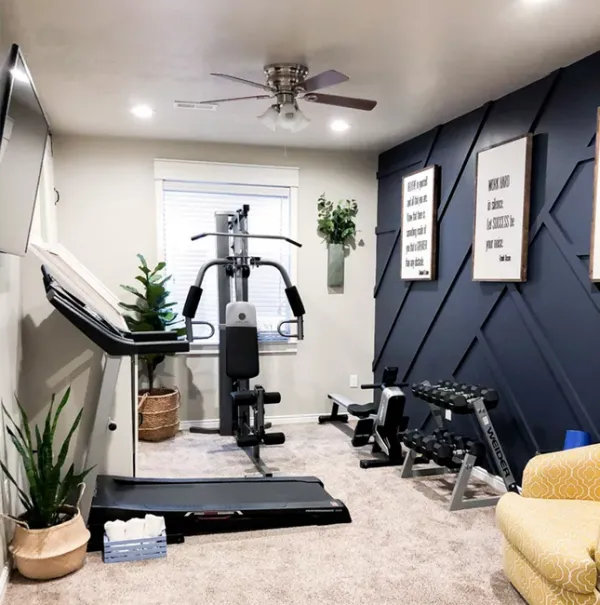
Photo: home gym setup with dumbbells resistance bands and bench in small room, via www.thedecorholic.com
Let's be honest. Between waiting 15 minutes for a squat rack on a Monday evening and driving through rush-hour traffic just to get your workout in, the traditional gym experience has its frustrations. More and more Americans are taking their training home — and for good reason.
But "home gym" doesn't have to mean a garage full of expensive equipment or a spare bedroom dedicated to a Peloton. With a smart, prioritized approach to spending, you can build a genuinely effective training setup for under $500. We've done the research, ranked the gear by real-world return on investment, and pulled in stories from people who've actually done it.
Let's get into it.
The Golden Rule of Budget Home Gym Building: Buy for Versatility First
The biggest mistake people make when outfitting a home gym on a budget is buying specialized equipment — a lat pulldown machine, a leg press, a chest fly station — before they've covered the fundamentals. Specialized machines are expensive, bulky, and limited in what they can do.
Instead, prioritize equipment that lets you perform the most movements per dollar spent. The more exercises a single piece of gear supports, the higher its ROI. Keep that principle front of mind as we walk through the recommended build.
Tier 1: The Absolute Essentials (Budget Target: ~$250)
These are the non-negotiables. If you only have $250, spend it here and you'll still have access to hundreds of effective workouts.
Adjustable Dumbbells — $150–$200
This is the single best purchase you can make for a home gym. A quality set of adjustable dumbbells — like the Bowflex SelectTech 552s or a PowerBlock set — replaces an entire rack of fixed weights. You can do everything from bicep curls and lateral raises to goblet squats, Romanian deadlifts, and dumbbell bench press.
If brand-new adjustables are out of budget, check Facebook Marketplace and Craigslist. Dumbbells sell secondhand constantly, especially after New Year's when resolution-setters realize they're not using them. You can often find fixed-weight sets for $1–$2 per pound.
What you can train: Upper body, lower body, core, cardio circuits. Almost everything.
Pull-Up Bar — $25–$40
A doorframe pull-up bar is pound-for-pound the best investment in home fitness. It handles pull-ups, chin-ups, hanging leg raises, and with a set of gymnastics rings or resistance bands attached, it becomes even more versatile. Look for a heavy-duty version rated for at least 300 lbs.
What you can train: Back, biceps, core, grip strength.
Resistance Bands Set — $20–$35
A set of loop bands and/or tube bands with handles adds tremendous range to a small-space setup. They're ideal for warm-ups, mobility work, accessory movements, and even as a primary training tool for higher-rep hypertrophy work. They also travel well — throw them in a bag and your workout goes with you.
What you can train: Literally everything, at varying intensities.
Tier 2: Upgrade Your Setup (Budget Target: ~$150 more)
Once you've covered Tier 1, these additions unlock significantly more training variety and quality.
Adjustable Bench — $80–$120
A flat bench is useful. An adjustable bench (flat, incline, decline) is transformational. It turns your dumbbells into a full chest, shoulder, and back training station. Look for one with a sturdy steel frame and multiple angle settings. Brands like Flybird and REP Fitness offer solid options in this price range.
What you can train: Chest press variations, incline rows, step-ups, Bulgarian split squats, tricep dips.
Jump Rope — $15–$25
Cardio doesn't require a treadmill. A quality jump rope — especially a weighted or speed rope — delivers serious conditioning in minimal space. Ten minutes of jump rope intervals can rival 30 minutes of moderate-intensity cardio. It's old-school, but it works.
What you can train: Cardiovascular conditioning, coordination, calf strength.
Foam Roller — $20–$30
Recovery gear is often overlooked in budget gym builds, but it pays dividends. A foam roller handles myofascial release (basically self-massage for your muscles), helps reduce soreness, and improves flexibility over time. Spend a few minutes rolling before or after your session and you'll notice the difference.
Tier 3: Power Moves If You Have Budget Left (Under $100)
These aren't essentials, but they're high-value additions if you have room in the budget and the space.
- Kettlebell (35 or 44 lbs): $40–$60. Kettlebell swings, goblet squats, and Turkish get-ups hit muscles that dumbbells don't reach as effectively.
- Ab wheel: $10–$15. Brutally effective core tool that beats crunches by a wide margin.
- Yoga mat: $20–$30. Needed for floor work, stretching, and protecting your floors from equipment.
- Dip bars: $30–$50. Adds tricep dips and L-sit work to your bodyweight arsenal.
Real People, Real Setups: Home Gym Success Stories
Marcus, 34, Atlanta, GA: "I was paying $65 a month for a gym I went to twice a week. I bought a set of used adjustable dumbbells off Facebook for $120, a pull-up bar for $30, and a bench on sale for $90. I've been training at home for 14 months and I'm in the best shape of my adult life. No commute, no waiting, no excuses."
Priya, 28, Austin, TX: "I live in a 700-square-foot apartment. I was convinced I couldn't have a home gym. Then I realized my living room floor is basically a gym if I have the right gear. Resistance bands, a pull-up bar on the bedroom door, and a jump rope. That's it. I've lost 22 pounds and actually enjoy working out now."
Derek, 41, Columbus, OH: "My full setup cost me $380. Adjustable dumbbells from a garage sale, a bench from Walmart, bands from Amazon, and a foam roller. I use it every single morning before my kids wake up. No gym would work with my schedule. This does."
Space-Saving Tips for Small Homes and Apartments
You don't need a garage or a spare room. Here's how to make it work in tight spaces:
- Use vertical space. Wall-mounted hooks keep bands and jump ropes off the floor.
- Fold and store. Many adjustable benches fold flat and slide under a bed.
- Designate a workout zone. Even a 6x6 foot area of cleared floor is enough for most dumbbell and bodyweight workouts.
- Rubber flooring tiles ($30–$50 for a starter set) protect floors, reduce noise, and make your space feel like an actual gym.
Where to Shop Smart
- Facebook Marketplace / Craigslist: Best source for used dumbbells, benches, and barbells at 40–60% off retail.
- Amazon: Competitive pricing on bands, foam rollers, jump ropes, and accessories.
- Dick's Sporting Goods / Academy Sports: Watch for seasonal sales, especially post-January and around Labor Day.
- REP Fitness / Rogue Fitness: Higher-end, but worth it for benches and barbells if you're buying new.
The Bottom Line
You don't need a massive budget or a dedicated room to train effectively at home. With a prioritized, versatility-first approach to spending, $500 gets you a setup that covers strength training, conditioning, mobility, and recovery — the full package.
The best gym is the one you actually use. For a lot of people, that's increasingly the one in their living room, garage, or spare corner of a bedroom. Build it smart, use it consistently, and the results will follow.
At GymSRV, we're here to help you train on your terms — wherever that happens to be.