Your Plateau Might Not Be a Plateau — It Might Be You Doing the Exact Same Thing Every Week

Photo by Photo by Redd Francisco on Unsplash on Unsplash
You've been hitting the gym consistently. You're eating your protein. You haven't missed a Monday in three months. And yet — nothing. The weight on the bar hasn't moved, the mirror looks the same, and you're starting to wonder if you've just maxed out what your body is capable of.
Here's the thing: you probably haven't. What you've likely done is train the same movement pattern so many times, in such an identical way, that your body stopped treating it as a challenge a long time ago.
This isn't a genetics problem. It's a stimulus problem.
What a "Plateau" Actually Is
In fitness circles, a plateau gets talked about like it's some mysterious wall your body builds to stop you from progressing. In reality, it's much more mechanical than that. Your muscles adapt to stress. When they encounter the same stress repeatedly, they stop adapting because they already have. That's not failure — that's your body being efficient.
The tricky part is that "the same stress" doesn't just mean the same weight. It means the same angle, the same speed, the same range of motion, the same grip, the same stance. All of those variables contribute to which muscle fibers get recruited, how hard they work, and whether your body registers the session as a reason to grow.
If even one of those variables has quietly calcified into habit — and for most people, several of them have — you're essentially doing the same workout you were doing six months ago, even if the plates look different.
The Invisible Habits Killing Your Progress
Most lifters don't consciously decide to stop varying their training. It just happens. You find a setup that feels comfortable, you stop thinking about it, and your body goes on autopilot. Here are the most common places that drift happens:
Foot position on lower body work. Whether you squat, leg press, or lunge, where your feet land changes everything. A slightly wider stance shifts more load to your glutes and adductors. A narrower stance puts your quads front and center. If your feet have been landing in the same spot for months, you've been training the same portion of the same muscles over and over.
Grip width on pressing and pulling movements. A close-grip bench press and a standard-width bench press are practically different exercises in terms of what they demand from your triceps versus your chest. Same goes for rows — a wider grip hits your upper back differently than a narrower one. If you've never experimented here, you're leaving stimulus on the table.
Range of motion. This one's sneaky. Over time, a lot of lifters unconsciously shorten their range of motion as weights go up, either to protect their ego or because they've never been coached to notice it. Training through a full range recruits muscle fibers that a partial rep never touches. If you've been doing half-reps without realizing it, going back to full depth isn't regression — it's a new workout.
Tempo. How fast you lower the weight matters more than most people realize. A controlled three-second eccentric (the lowering phase) creates significantly more mechanical tension than dropping the weight quickly and bouncing back up. If you've never intentionally slowed down your reps, your muscles have barely experienced that kind of stress.
How to Actually Diagnose What's Going On
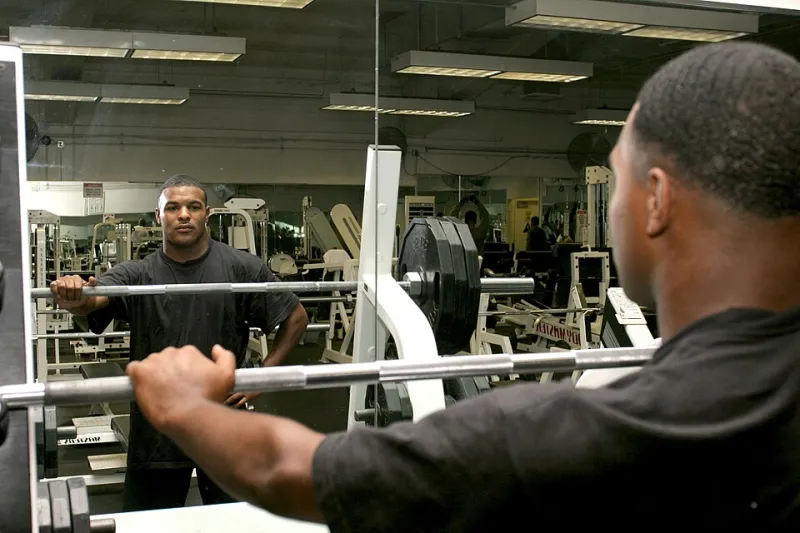
Before you change anything, spend one session just observing yourself. If you have access to a mirror or a training partner, even better. Record a set or two on your phone.
Ask yourself:
- Are my feet landing in exactly the same spot every single rep?
- Am I gripping the bar the same way I always have, without thinking?
- Am I reaching the same depth I was three months ago, or has it crept up?
- How fast am I lowering the weight? Would I describe it as controlled, or just "not dropping it"?
If the honest answer to any of those is "I have no idea, I've never thought about it" — congratulations, you've found your plateau. It was hiding in plain sight.
A Simple Framework for Introducing New Stimulus
You don't need a new program. You need a new variable. Here's a practical way to approach it:
Pick one lift that feels stuck. Don't overhaul everything at once. Choose the movement where progress has been most frustrating.
Change one variable per training block. If your four-week block is almost up and your bench press hasn't moved, spend the next block experimenting with grip width. Go slightly wider for two weeks, slightly narrower for two weeks. Note what you feel and where.
Add a tempo prescription. Take any lift and try a 3-1-1 tempo: three seconds down, one second pause at the bottom, one second up. Do this for two weeks and watch how your perception of a "light" weight completely changes.
Adjust your stance on leg day. If you always squat with a shoulder-width stance, try going a full inch wider on each side for a month. The soreness in new places will tell you everything you need to know about what you weren't training before.
Don't abandon the exercise — modify the execution. This is the key distinction. You don't need to swap squats for hack squats or bench press for cable flyes. You just need to stop doing the exact same squat and the exact same bench press in the exact same way, indefinitely.
Boredom vs. a Real Plateau
One more thing worth separating out: sometimes what feels like a plateau is just boredom. Your numbers haven't stalled — your motivation has. These feel identical from the inside but require completely different fixes.
A real plateau means your performance metrics (weight lifted, reps completed, perceived difficulty) have genuinely flatlined despite consistent effort. Boredom means you're dreading the workout before you start, going through the motions once you're there, and telling yourself you're stuck because it's easier than admitting you've lost interest.
If it's boredom, the variation strategies above will help — novelty is motivating. But it's worth being honest with yourself about which one you're actually dealing with.
The Bottom Line
Your body is not working against you. It's doing exactly what it's supposed to do: adapting to what you give it and then waiting for something new. The moment you stop giving it new information, adaptation stops. That's not a plateau. That's just physics.
The good news is that you don't need to tear your program apart, hire a new coach, or buy a different kind of protein powder. You just need to look closely at the details of how you're training and ask whether "consistent" has quietly become "identical."
Change your foot position. Slow down your reps. Widen your grip. Go deeper. The stimulus is right there — you just stopped looking for it.