Stop Watching Yourself Lift: How Mirror Dependency Is Quietly Wrecking Your Form
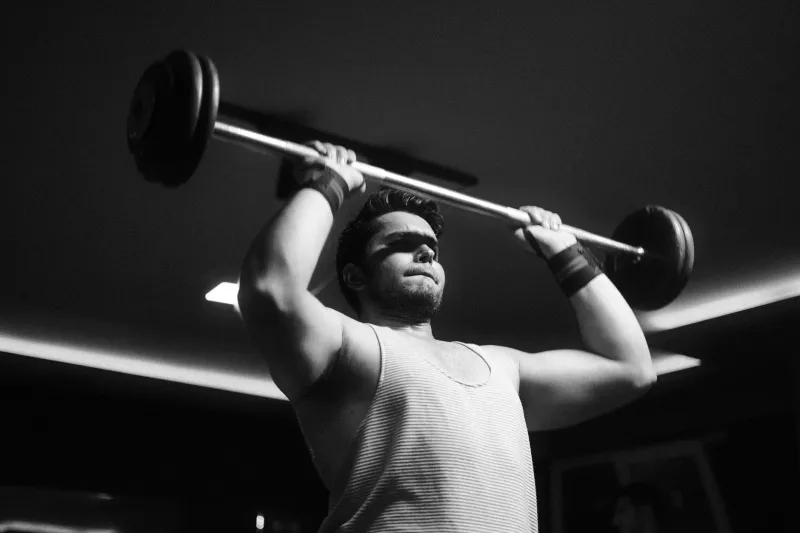
Walk into almost any commercial gym in America and you'll find the same setup: walls lined with mirrors, everyone sneaking glances mid-rep, and a general assumption that watching yourself work out is how you keep your form in check. It feels logical. You see something off, you fix it. Simple, right?
Not exactly.
The relationship between visual feedback and movement quality is a lot more complicated than it looks — and for a lot of lifters, the mirror has quietly become a crutch that's actually getting in the way of real technique development. Let's break down what's actually happening when you rely on your reflection to coach you through a set.
Your Brain Wasn't Built to Move and Watch at the Same Time
When you're performing any kind of skilled movement — a squat, a deadlift, a press — your nervous system is juggling a massive amount of information. Muscle activation, joint position, balance, breathing, load management. That's a lot of plates spinning at once.
Now add in a visual task — actively watching your reflection, analyzing your knee tracking, checking whether your shoulders are creeping up — and you've just split your brain's attention in a way it wasn't really designed to handle during physical output.
This is where something called proprioception comes in. Proprioception is your body's internal GPS — the sensory system that tells your brain where your limbs are in space without you having to look. It lives in your muscles, tendons, and joints, and it's the foundation of good movement mechanics.
Here's the problem: when you lean on the mirror, you're essentially outsourcing that job to your eyes. And your eyes, while great at a lot of things, are terrible at reading the subtle internal cues that actually matter for movement quality. You might see that your squat looks fine from the front, but you won't see the compensatory hip shift happening because your right glute isn't firing the way it should.
The Compensation Pattern You Don't Know You're Building
When your eyes become your primary feedback system, your body starts to optimize for looking right rather than moving right. Those are two very different things.
Say you're doing a Romanian deadlift and you're watching yourself in the mirror. Your brain notices your back is rounding slightly, so you consciously pull your shoulders back. You look better. You feel like you fixed it. But if the rounding was coming from tight hamstrings or a weak posterior chain, you didn't fix anything — you just masked it with a surface-level correction. The underlying dysfunction is still there, and it's still loading your spine every single rep.
Over time, these visual band-aids stack up. You build movement patterns that look acceptable in a mirror but are held together with compensations and workarounds. And because you've been watching yourself instead of feeling yourself, you have no internal reference point to notice when something's wrong.
This is one of the sneakier reasons people plateau or get nagging injuries they can't explain. The form looked fine. They were checking. What more could they do?
Why Gyms Are Set Up This Way (And Why That's Not Necessarily Your Friend)
Mirrors in gyms aren't there purely for your biomechanical benefit. They make spaces look bigger, they're a fixture of gym culture going back decades, and let's be honest — people like being able to check themselves out. There's nothing wrong with that, but it's worth recognizing that the mirror-lined gym wasn't designed by sports scientists optimizing for proprioceptive development.
Professional athletes and serious lifters often train in environments without constant mirror access — and many coaches actively prefer it. When you can't see yourself, you're forced to develop a real internal sense of your body. That internal sense is what holds up under fatigue, under load, and in real-world movement contexts where there's no mirror in sight.
What to Do Instead
None of this means you should tape over every mirror in your gym. Mirrors can be a useful tool for occasional form checks, especially when you're learning a new movement. The key word is occasional.
Here are some practical ways to start building real body awareness instead of mirror dependency:
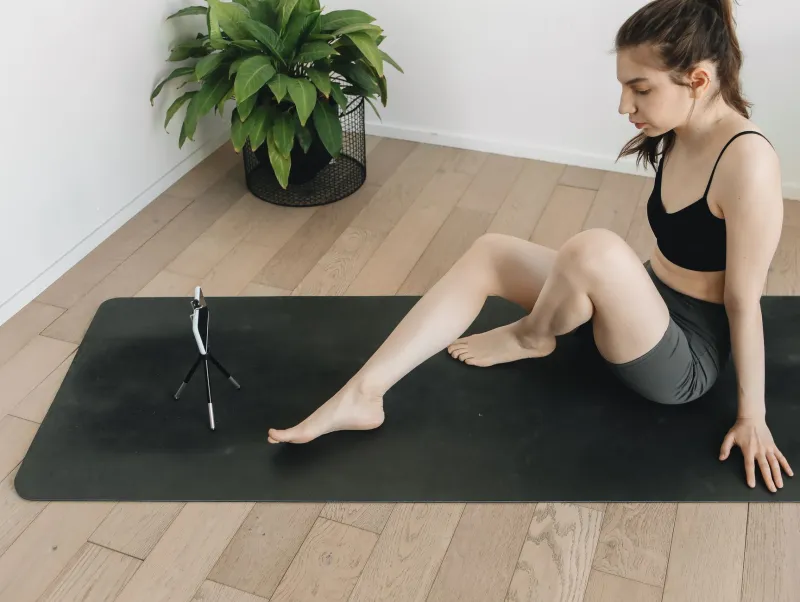
Use video instead of mirrors. Set up your phone to record a set, then watch it after. This gives you visual feedback without splitting your attention mid-rep. You can actually see what you did, rather than trying to process it in real time while also lifting.
Close your eyes during warm-up sets. This sounds weird, but it works. On your lighter warm-up sets, close your eyes and focus entirely on how the movement feels — where you feel the load, which muscles are working, where your balance point is. You'll be surprised how much information you've been ignoring.
Work with a coach or training partner. Another set of eyes that can cue you verbally — without you having to look — is far more effective than a mirror. A good cue lands in your body, not on your retina.
Do single-leg and unilateral work. Exercises like Bulgarian split squats, single-leg Romanian deadlifts, and single-arm rows demand proprioceptive engagement in a way bilateral movements don't. They're harder to fake, and they build the internal awareness that carries over everywhere.
Focus on sensation, not appearance. Pick one or two internal cues for each lift — "feel the floor through your whole foot," "squeeze the bar like you're trying to bend it" — and keep your attention on those rather than on your reflection. This is how experienced lifters actually think about their training.
The Long Game
Building real proprioceptive awareness takes longer than just watching yourself in a mirror. There's no instant visual confirmation that you're doing it right. It can feel uncertain at first, especially if you've been a heavy mirror-checker for years.
But the payoff is significant. Lifters who develop genuine body awareness are more resilient — they can maintain good mechanics under fatigue, they catch problems before they become injuries, and they adapt more quickly when their programming changes. They're also less dependent on perfect gym conditions, which means their training translates outside the weight room in ways that mirror-focused lifting simply doesn't.
At GymSRV, we talk a lot about training smarter — and sometimes that means questioning the habits that feel productive but aren't actually serving you. Watching yourself in the mirror feels like diligence. But building the internal awareness to feel your way through a quality rep? That's the real work.
Your reflection can't feel a misloaded hip. Your nervous system can. Start listening to it.