Why the Same Weight Feels Totally Different Depending on Where You Train

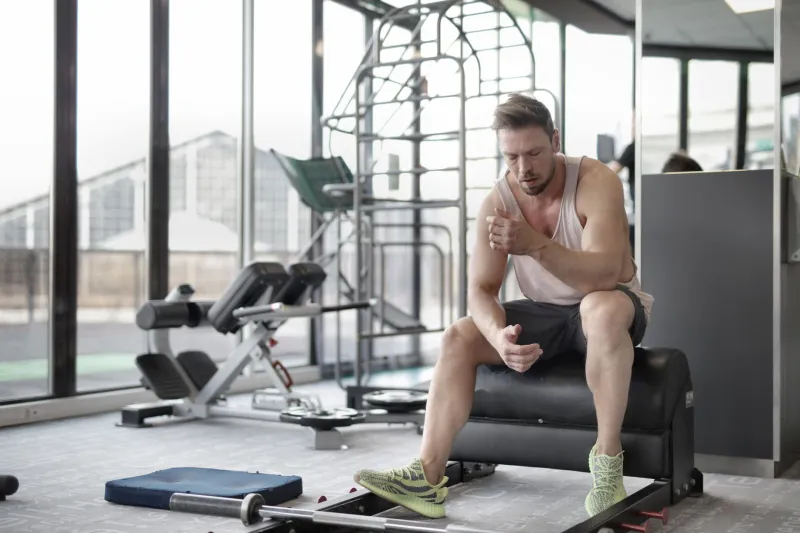
Photo by Photo by Samuel Girven on Unsplash on Unsplash
You've had this experience. You're repping out 225 on the bench at your regular gym like it's nothing, feeling dialed in, confident, locked. Then you visit a friend's gym across town — same weight, same warmup, same everything — and suddenly it feels like you're fighting for your life under the bar. You rack it, look around, and wonder if you somehow got weaker overnight.
You didn't. But something did change. And figuring out what that something is can make you a smarter, more adaptable lifter no matter where you train.
The Equipment Variable Nobody Talks About Enough
Not all barbells are created equal. This sounds obvious, but most people don't really feel it until they're holding a bar that whips differently than what they're used to. A stiff powerlifting bar and a flexible Olympic weightlifting bar behave completely differently under load. The knurling — that textured grip pattern — varies wildly between brands and can throw off your hand placement and grip confidence in ways that cascade all the way up to your shoulders and chest.
Plates are another sneaky culprit. Bumper plates are thicker than iron plates, which means a loaded bar sits differently on the floor for deadlifts. The diameter affects your starting position, your hip hinge, your whole setup. If you've only ever pulled with iron plates and suddenly you're at a CrossFit-style gym with rubber bumpers, you might actually be starting from a slightly different position without realizing it.
Bench heights, squat rack depths, cable machine resistance curves — all of it varies. You're not weaker. You're just recalibrating.
Mirrors, Lighting, and the Psychology of Feeling Strong
Here's where things get genuinely interesting. Your environment doesn't just affect your mechanics — it affects your mind, and your mind affects your output more than most people want to admit.
Mirror placement matters. At your regular gym, you've unconsciously learned to use your reflection as feedback — you know exactly what your squat looks like at the right depth, what your shoulders look like when they're packed properly. Walk into a gym with mirrors positioned at different angles, or no mirrors at all, and that visual feedback loop breaks. You feel less certain. That uncertainty translates into hesitation, and hesitation under a heavy bar is not your friend.
Lighting plays a similar psychological role. Bright, harsh lighting in a commercial gym can actually make you feel more exposed and self-conscious. Dim, moody lighting in a smaller facility might feel either focused or claustrophobic depending on your personality. Research in environmental psychology consistently shows that ambient conditions — light, sound, temperature — influence perceived effort and actual performance. This isn't soft science. It's real, and serious athletes account for it.
Crowd energy is maybe the biggest factor of all. If you've ever hit a PR with people watching versus grinding through a solo session at 6 a.m. in an empty gym, you already know this intuitively. Some people thrive under observation. Others tighten up. Knowing which camp you fall into helps you understand why certain gyms feel like a performance boost and others feel like a performance drain.
The Gear That Travels With You (And the Gear That Doesn't)
Your own equipment creates consistency. Your lifting shoes, your belt, your wrist wraps — these are variables you control regardless of where you train. If you're serious about maintaining performance across different facilities, investing in quality personal gear isn't vanity. It's a smart way to keep at least some constants in an otherwise variable environment.
The same logic applies to your warmup routine. Having a standardized sequence you run through regardless of location helps your nervous system arrive at a similar readiness state. When everything around you is unfamiliar, your routine becomes an anchor. It signals to your body that it's time to work, no matter what the ceiling height or the playlist sounds like.
How to Actually Adapt on the Fly
So what do you do when you're stuck in an unfamiliar gym and your usual approach isn't clicking? A few practical moves:
Give yourself a grace period. Your first session anywhere new is essentially reconnaissance. Don't expect PRs. Treat it as a calibration workout — you're learning the equipment, the vibe, the layout. Drop the ego, dial back the intensity by about 10-15%, and focus on movement quality.
Test the equipment before you load it. Before you throw your working weight on an unfamiliar bar, do a few sets with lighter loads and pay attention. Does it whip? Is the knurling aggressive or smooth? Where does it balance? You're gathering data.
Control your controllables. Bring your own gear. Stick to your warmup. Keep your rest periods consistent with what you usually do. The more familiar anchors you maintain, the less cognitive load the unfamiliar environment creates.
Reframe the experience. Training in different environments is genuinely useful for your long-term development. It exposes weaknesses in your technique that your home gym setup might be masking. It builds mental resilience. Elite athletes don't just train in one controlled setting — they learn to perform regardless of conditions. You can too.
What This Actually Tells You About Your Strength
If you feel significantly weaker in a different gym, that's information. It might mean your strength is more equipment-dependent than you realized — which is a fixable problem. It might mean your mental game needs work — also fixable. Or it might mean the gym you're visiting has genuinely inferior equipment that's mechanically harder to lift on, which is just a fact of life in some facilities.
The goal isn't to perform identically everywhere. That's not realistic. The goal is to understand why variation happens and minimize the variables you can control while making peace with the ones you can't.
Strength that only works in one specific room, on one specific bar, under one specific lighting setup isn't as transferable as you think. But strength that you've tested across different environments, adapted to, and built on? That's the real thing.
Next time you feel off at an unfamiliar gym, don't panic and don't write off the session. Treat it like a puzzle. Figure out what's different, adjust accordingly, and get to work. That adaptability is a fitness skill in itself — and it's one most people never bother to develop.