What Your Nose Knows About Your Workout That Your Brain Doesn't
Walk into a gym you've trained in for years and something clicks before you even touch a weight. Your heart rate nudges upward. Your shoulders roll back. You feel ready — and you haven't done a single warm-up rep yet. Most people chalk that up to habit or motivation. But a big piece of what's happening isn't in your head. It's in your nose.
Scent is one of the most underappreciated performance factors in fitness. We obsess over sleep, macros, programming, and recovery tools — but almost nobody talks about how the smell of their training environment is quietly running the show.
The Brain-Nose Connection Is Faster Than You Think
Here's a quick biology refresher that actually matters for your training. The olfactory system — the part of your brain that processes smell — has a direct line to your limbic system, which handles emotion and memory. Unlike your other senses, scent bypasses several processing layers and hits your brain almost instantly. That's why a smell can trigger a vivid memory or an emotional response before you've even consciously registered what you're smelling.
For athletes and regular gym-goers, this creates something powerful: scent-anchored conditioning. Over time, your brain starts associating specific smells with specific states. The rubbery bite of a weight room floor, the metallic tang of barbells, the chalk cloud hanging in the air near a deadlift platform — these aren't just background details. They're environmental cues that your nervous system has learned to respond to.
When those smells show up, your brain reads the room: it's time to work.
Why Chalk Dust Hits Different
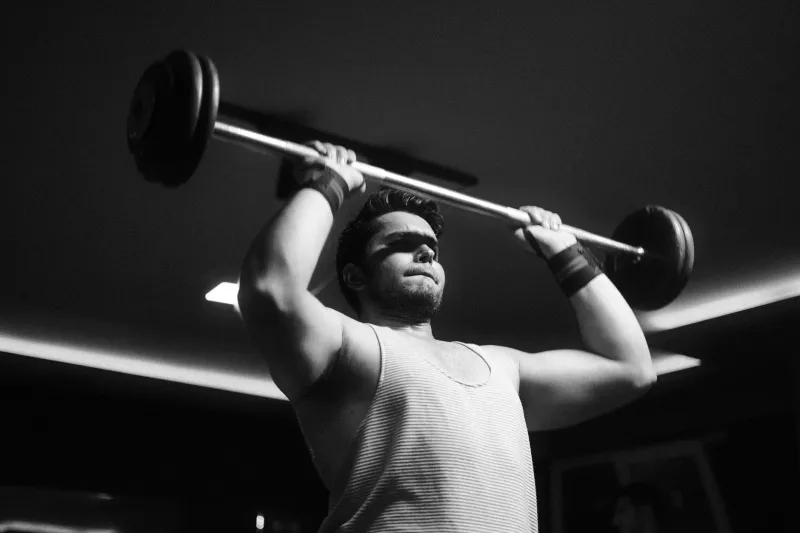
If you've ever trained at a serious lifting gym — the kind where chalk is everywhere and nobody wipes it up between sets — you probably know the feeling. There's an edge in the air. People move with intention. And that fine white dust drifting off the platform isn't just functional. It's become a sensory trigger for a lot of lifters.
Carbonate of magnesium doesn't smell like much on its own. But in context — combined with sweat, iron, and the ambient energy of a room full of people pushing hard — it becomes part of a package that signals effort. Regular exposure builds that association over time. Eventually, just encountering that sensory mix starts priming your body for high output before the first rep.
This is the same principle behind pre-competition rituals in sports. Athletes don't just warm up their muscles. They warm up their nervous systems, and sensory cues are a big part of how that happens.
When the Smell Is Wrong, Your Performance Feels Off
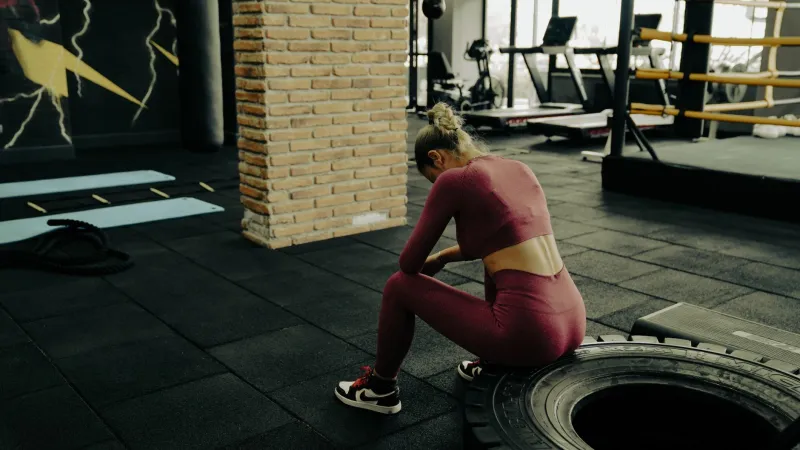
Flip it around. Think about a time you trained somewhere that felt completely off — a hotel gym that smelled like cleaning products and carpet, or a new facility that hadn't quite developed its own scent identity yet. Maybe you went through the motions but never quite locked in. Your lifts felt heavier. Your focus drifted. You left wondering if you were just tired.
You might not have been tired. You might have been in the wrong smell.
This isn't woo-woo stuff. Research in environmental psychology consistently shows that context affects performance. Sensory mismatch — being in a space that doesn't match your brain's learned expectations — creates a kind of friction that's hard to name but easy to feel. Your body is primed for one environment and suddenly placed in another. The cues don't match, so the automatic readiness response doesn't fully fire.
For people who travel frequently or switch gyms often, this is worth taking seriously. That sluggish session at an unfamiliar gym might not be jet lag or a bad training day. It might be your nervous system waiting for a signal it never received.
Building Your Own Sensory Anchors
The good news is that you can work with this, not just around it. Sensory anchoring is a real and usable tool — and you don't need a sports psychologist to apply it.
Consistency is the foundation. The more you train in the same environment, the stronger those scent associations become. If you're building a home gym, let it develop its own smell. Rubber mats, iron, maybe a little sweat — don't scrub it into sterility. That accumulation is working for you.
Portable anchors can travel. Some athletes use a specific scent — a particular training balm, a few drops of peppermint oil, or even a familiar pre-workout — as a portable sensory cue. Peppermint, specifically, has shown up in exercise research as a scent associated with increased alertness and perceived energy. Apply it consistently during training and your brain starts connecting it to performance mode. Bring it on the road and you're carrying part of your home environment with you.
Ammonia inhalants are an extreme version of this. Used by powerlifters and strongmen before max attempts, smelling salts are the nuclear option in sensory activation. They work partly through a sharp physical response, but there's also a psychological component — the ritual of it, the sharpness of the smell, signals the brain that something serious is about to happen. Not recommended for everyday training, but it illustrates just how directly scent can flip a performance switch.
What This Means for Where You Train
Choosing a gym is usually about location, price, equipment, and hours. Those things matter. But if you've been struggling with consistency or intensity, it might be worth asking a different question: does this place feel right?
That feeling is partly sensory. A gym that smells like effort — rubber, iron, chalk, and the honest sweat of people working hard — is a gym that's building an invisible infrastructure for your performance every time you walk through the door. A gym that smells like a hotel lobby is asking your brain to do extra work just to get into the zone.
This isn't about being precious or high-maintenance. It's about understanding that your training environment is part of your training program. The equipment matters. The layout matters. And yeah — what the place smells like matters too.
Train the Whole System
Most fitness content focuses on what you do in the gym. GymSRV is built around the idea that how you train — the full picture, including the environment you train in — is what actually drives long-term results and sustainable habits.
Your nose has been tracking your training data since day one. It's logged every session, catalogued every environment, and built associations that your conscious brain doesn't even know about. Start paying attention to what it's telling you.
Sometimes the reason a workout clicks isn't your programming or your playlist. It's that the air smells exactly like it should.