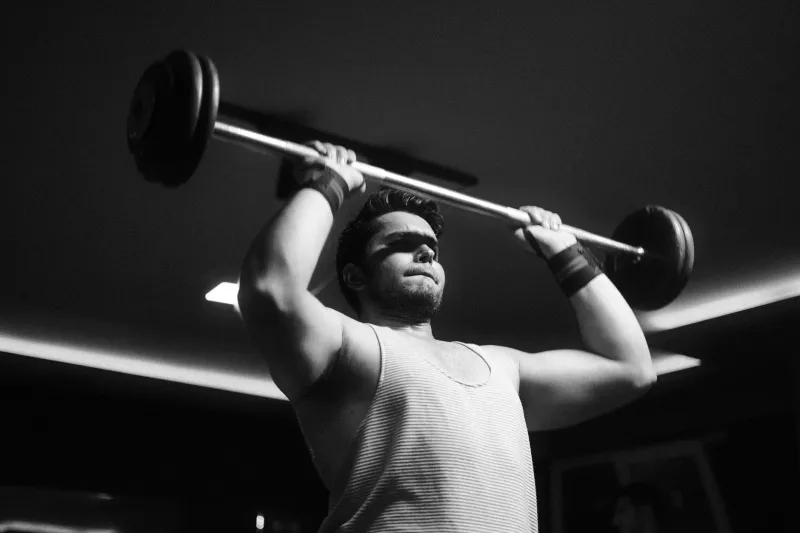
That Last Exercise Isn't Finishing Your Workout — It's Finishing You

The Finisher Feels Good. That Doesn't Mean It's Working.
There's a certain satisfaction that comes with collapsing after a workout. You pushed through every set, loaded the bar one more time when everything in your body said quit, and then capped it all off with a brutal burnout — 100 banded pull-aparts, a 200-meter farmer's carry, or whatever your gym's version of "leaving it all on the floor" looks like.
Problem is, that feeling of total destruction isn't the same thing as productive training. In fact, for a lot of people grinding through regular strength or hypertrophy programs, the finisher is quietly working against everything they spent the last 45 minutes building.
Let's unpack why.
What's Actually Happening in Your Body at the End of a Session
By the time you're wrapping up a solid training block, your neuromuscular system is already running on fumes. Muscle glycogen — the fuel your body taps for high-intensity effort — is significantly depleted. Motor unit recruitment starts to get sloppy. And your central nervous system, which coordinates the whole operation, is under real cumulative stress.
Research published in the Journal of Strength and Conditioning Research has consistently shown that technical breakdown accelerates sharply in the final sets of a fatigued training session. Translation: the reps you're grinding out at the end look a lot worse than the ones you did at the start, whether you feel it or not.
When form breaks down, two things happen simultaneously. First, you stop effectively loading the target muscle. Second, you start compensating with secondary muscles and connective tissue that were never meant to carry that load. A finisher done on a fatigued body isn't just low-quality stimulus — it's a direct invitation for overuse injuries.
The CNS Fatigue Problem Nobody Talks About Enough
Most gym-goers think about fatigue in terms of sore muscles. Central nervous system fatigue is a different animal entirely, and it doesn't always announce itself the same way.
CNS fatigue accumulates across a session and lingers well into recovery. Symptoms include sluggishness in the days following a hard workout, decreased motivation to train, and that frustrating feeling of being physically fine but mentally checked out during sessions. Sound familiar?
Finishers that involve high-rep, high-intensity efforts — think heavy kettlebell swings to failure or an all-out sled sprint — can spike CNS fatigue significantly, especially when they come after an already demanding session. You're not just tired the next day; you're potentially compromising the quality of your next two or three workouts.
For anyone running a program built around progressive overload — which, if you're serious about results, you should be — that's a real problem. You can't progressively overload when your nervous system is constantly playing catch-up.
So When Do Finishers Actually Make Sense?
Here's where it gets nuanced. Finishers aren't inherently bad. They're just frequently misapplied.
They tend to work well under a few specific conditions:
You're doing a dedicated conditioning day. If your session is already built around metabolic work — circuits, HIIT, or GPP (general physical preparedness) training — a finisher fits the context. You're not stacking fatigue on top of heavy strength work; you're just extending a session that was always meant to push your conditioning.
The finisher is low-skill and low-load. Exercises that don't require significant neuromuscular precision — think light sled pushes, band pull-aparts, or steady-state bike sprints — carry far less injury risk when done fatigued. You're not asking your body to coordinate a complex movement under load.
Your weekly volume is already under control. If you're not already near your maximum recoverable volume for the week, a finisher can add legitimate stimulus. But if you're already flirting with your ceiling, piling on extra work is just junk volume with extra steps.
You're an experienced lifter with a clear intent. Coaches who program finishers for advanced athletes usually have a specific physiological goal — targeting a metabolic pathway, building mental toughness for competition, or working a lagging muscle group with minimal systemic stress. That's very different from randomly doing 50 burpees because you have ten minutes left.
The Ego Problem
Let's be honest about something. A lot of finishers aren't about optimizing training. They're about feeling like you did enough.
There's a cultural pressure in American gym culture — amplified by social media and the "no days off" mentality — to equate suffering with success. If you didn't feel completely wrecked, you didn't work hard enough. That belief drives people to add volume at the worst possible time in their session, when their body is least equipped to use it well.
Diminishing returns aren't a myth. They're basic exercise physiology. After a certain point in any training session, additional work produces progressively less stimulus and progressively more stress. The goal isn't to maximize discomfort — it's to maximize the signal-to-noise ratio. More fatigue is just noise.
What to Do With Your Last 10 Minutes Instead
If you've been reflexively adding a finisher to every session, here are some evidence-backed alternatives that'll actually move the needle:
Prioritize cool-down mobility work. Static stretching and soft tissue work done post-session can meaningfully improve long-term flexibility and reduce DOMS. It's unglamorous, but ten minutes of hip flexor stretching and thoracic mobility drills will do more for your next session than 100 goblet squats ever will.
Add a targeted accessory movement at low intensity. If there's a genuine weak link — say, your glutes aren't firing well during squats — a few low-load sets of hip thrusts or clamshells with a light band can address it without taxing your recovery. This is intentional, not ego-driven.
Use it for breathwork or parasympathetic downregulation. This sounds soft, but the research is solid. Box breathing and diaphragmatic breathing exercises after training can accelerate the shift from sympathetic to parasympathetic nervous system dominance, which directly supports recovery. Your body recovers faster when it's not still running in fight-or-flight mode.
Log your session and plan the next one. Seriously. Five minutes of intentional journaling — what worked, what didn't, where you want to add load next time — is a performance tool that most recreational lifters completely ignore.
Train Smarter at the Finish Line
The last ten minutes of your workout aren't wasted if you don't destroy yourself. They're actually some of the most valuable real estate in your training session — time you can use to set up better recovery, address weak points intelligently, or simply give your body the signal that it's okay to start rebuilding.
The finisher trap is seductive because it feels disciplined. But discipline isn't about doing more — it's about doing what actually works. And what works, more often than not, is knowing when to stop.