Someone Else's Six-Pack Is Quietly Ruining Your Workout
The Gym Has Always Been a Competitive Space — Social Media Just Turned Up the Volume
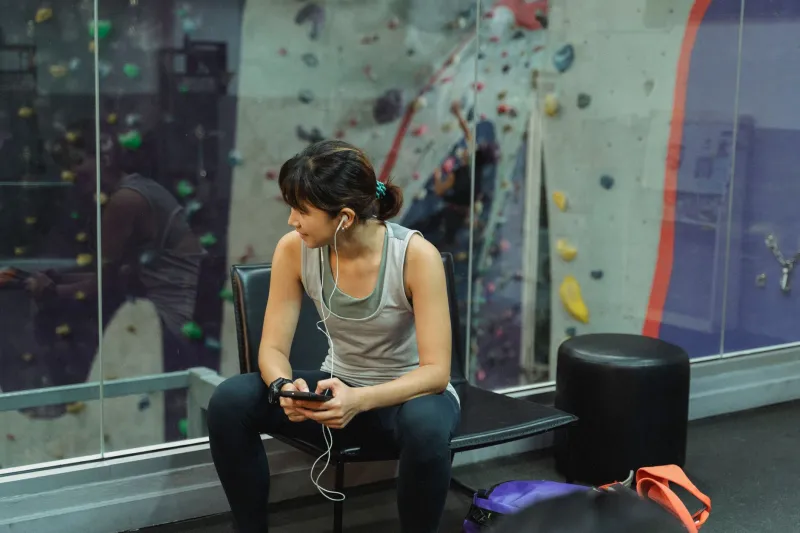
Walk into any gym in America and you'll notice something almost immediately: people checking their phones between sets. Sometimes it's music, sure. But a lot of the time, it's Instagram. It's TikTok. It's someone scrolling through transformation posts while sitting on a bench they're not even using.
This isn't a judgment — it's just the reality of where fitness culture has landed. And while social media has genuinely helped a lot of people get off the couch and into a gym, it's also created a comparison engine that runs 24/7 in the background of your brain. You don't always notice it. But it's there, quietly measuring you against everyone else's best moments.
The problem isn't that you care about results. Caring about results is good — it's literally why you show up. The problem is whose results you're measuring yourself against, and what that constant comparison is actually doing to your head.
What Comparison Actually Does to Your Brain
There's a well-documented psychological concept called social comparison theory, first introduced by psychologist Leon Festinger back in the 1950s. The core idea is simple: humans naturally evaluate themselves by comparing to others. It's wired in. You can't fully turn it off.
But here's where it gets complicated. Research published in the Journal of Social and Clinical Psychology found that passive social media use — the kind where you're just scrolling, not posting or engaging — is strongly linked to decreased self-esteem and increased feelings of inadequacy. In a fitness context, that translates directly into feeling like your progress isn't enough, even when it objectively is.
Worse, comparison doesn't just hurt your mood. It messes with your training. A study out of the University of Michigan found that people who frequently compared their physical appearance to others reported lower exercise motivation and higher rates of quitting structured workout programs. You stop focusing on your actual goals and start chasing a moving target that was never yours to begin with.
The result? Inconsistency. You hop between programs because someone online said their routine is better. You cut calories too aggressively because someone posted an impressive physique. You skip rest days because some influencer brags about training seven days a week. None of this is your plan — it's theirs, filtered through a lens designed to look impressive.
The Highlight Reel Problem
Here's something worth sitting with: the person you're comparing yourself to isn't showing you their bad days.
They're not posting the week they missed four sessions because of work stress. They're not showing the years of consistent, unglamorous effort that built that physique. They're definitely not mentioning the genetics, the lighting, the pump from a pre-workout, or the fact that the photo is one of forty they took that day.
You're comparing your full, unfiltered behind-the-scenes to someone else's curated greatest hits. That's not a fair fight. It was never going to be.
And yet, the brain doesn't always make that distinction automatically. When you see enough polished content in a row, your reference point for "normal" progress gets completely distorted. Three months of solid training starts to feel like nothing because you've been watching people post dramatic transformations every week.
Practical Ways to Break the Cycle
Audit your feeds with zero mercy. Go through the accounts you follow and ask yourself honestly: does this content make me feel motivated or does it make me feel like I'm behind? If it's consistently the latter, unfollow. Not because those creators are bad people, but because the content isn't serving your actual goals. Your feed should feel like fuel, not a measuring stick.
Build a personal baseline. One of the most effective things you can do is start tracking your own progress in a way that has nothing to do with anyone else. Log your lifts. Take monthly photos for yourself — not to post, just to have. Note how your energy levels feel, how your sleep has improved, how you're recovering faster than you were six weeks ago. When your reference point is you from last month, progress becomes a lot easier to see and appreciate.
Define what success looks like for your life. A 22-year-old fitness influencer with no kids, a flexible schedule, and a sponsorship deal is operating in a completely different context than someone juggling a full-time job, family responsibilities, and trying to get to the gym three times a week. That's not an excuse — it's just reality. Your version of progress has to be built around your actual life, not someone else's optimized one.
Use comparison as data, not judgment. This one takes practice, but it's worth developing. When you notice yourself comparing, try to get curious instead of critical. What specifically are you comparing? Is there something genuinely useful you can learn from it, or is it just noise? Sometimes seeing someone further along in their journey is genuinely motivating. The key is whether it's pushing you toward your goals or just making you feel inadequate.
Find a community that competes with itself. Local gym communities, small group training classes, or even accountability partners who are focused on personal progress rather than aesthetics can completely reframe how you think about your own journey. When the people around you are celebrating each other's PRs and showing up consistently, that becomes the new normal — and it's a much healthier one.
Progress That's Actually Yours
Here's the thing about fitness that gets lost in all the noise: it's one of the few areas of life where the work is genuinely, completely personal. Nobody else can do your reps. Nobody else is going to feel the difference when you finally nail a lift you've been working toward for months. Nobody else is living in your body.
When you train for your baseline — when you measure yourself against who you were last month instead of who someone else is right now — something shifts. The work starts to feel more meaningful. The small wins actually register. You stop white-knuckling through sessions and start showing up because you're genuinely invested in your own story.
Social media isn't going anywhere, and gym culture will always have some element of comparison baked in. But you get to choose how much real estate that gets in your head. The smartest training decision you might make this year has nothing to do with a new program or a different split — it might just be deciding that your progress is worth paying attention to on its own terms.
Train smarter. That starts with training for you.